An Automated Future: Why Solarpunk Societies Outcompete Cyberpunk Ones
Expansive Liberation vs Elite Domination

This post argues that in an automated future, societies face a structural choice between concentrated elite control and shared wealth and agency. While elite-controlled systems may appear more efficient in the short term, they are brittle and narrow. Societies that preserve freedom, equality, and democratic legitimacy are structurally better at innovation, adaptation, and long-term stability. This shared future is not a moral fantasy but a continuation of the same principles that allowed capitalism to outperform feudalism and slavery.
Assume that artificial intelligence and autonomous robotics increasingly take over most jobs, leaving large parts of the population without traditional employment. From that point, there appear to be two broad paths society could follow.
Path One: Shared Wealth and Power
Democracy and human rights persist, and the prosperity created by AI is shared with all citizens through mechanisms such as Universal Basic Income or universal shares and dividends.
Path Two: Elite Control
A wealthy minority retains most of the abundance and power generated by automation, while the majority are left in relative poverty, or worse, if they are no longer considered economically necessary. This path likely involves the hollowing out or destruction of democratic institutions.
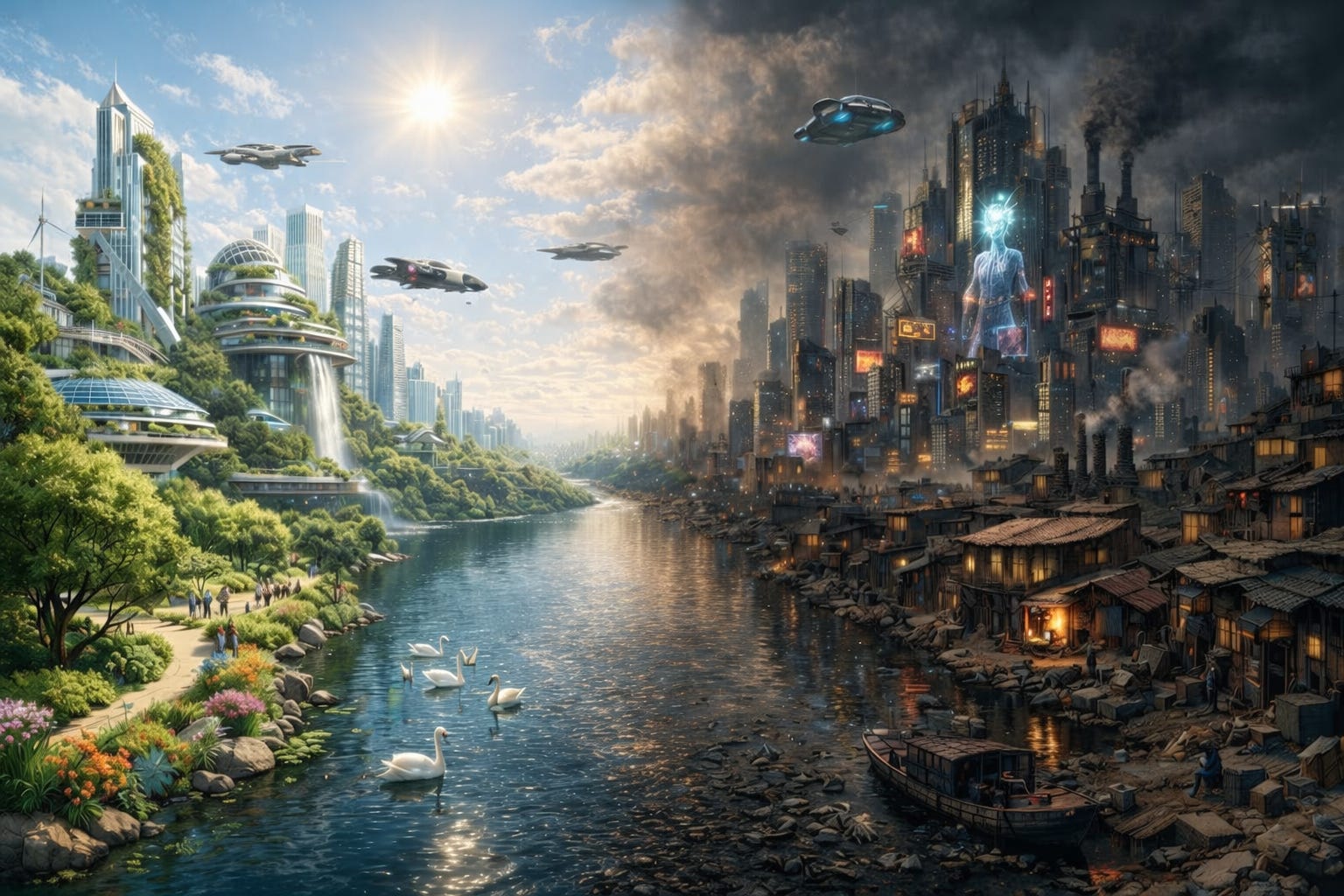
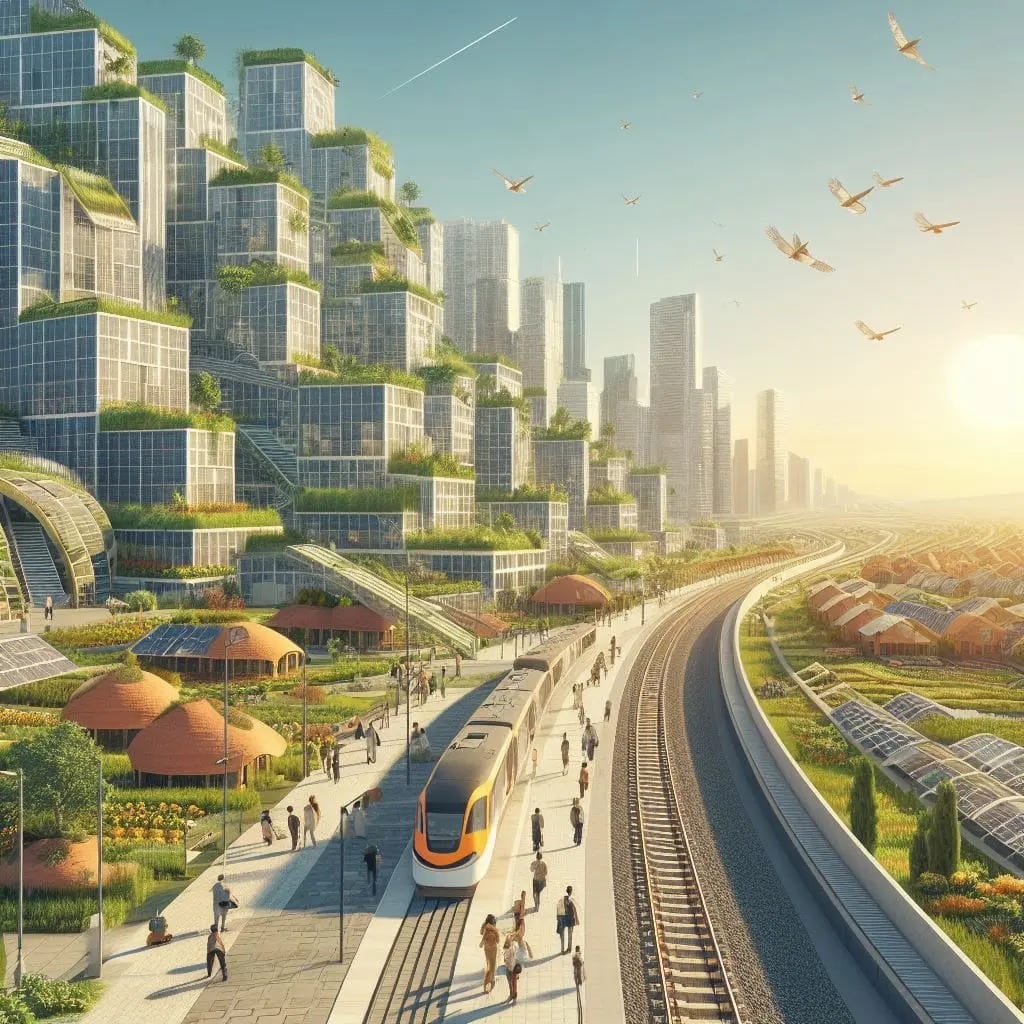
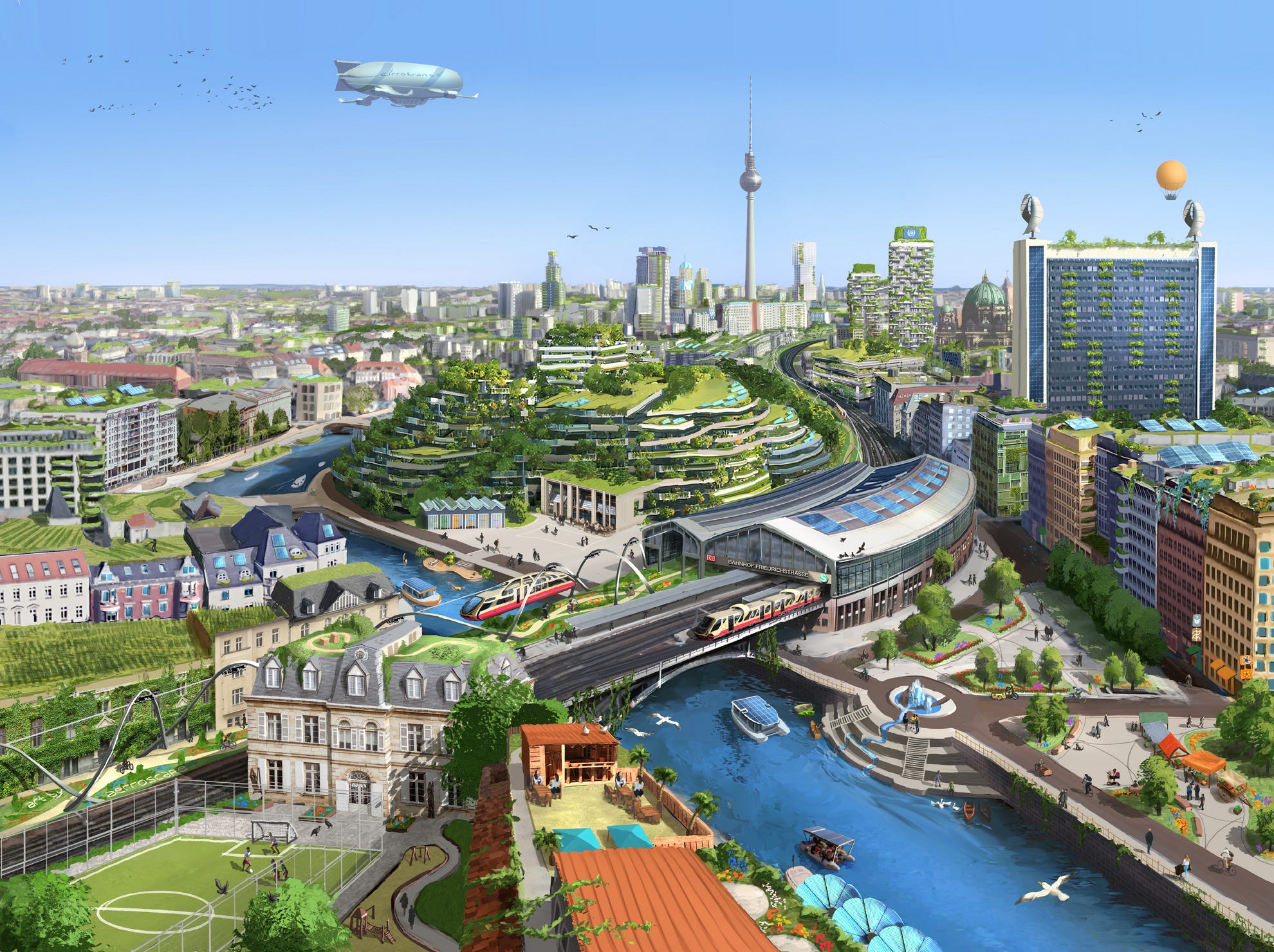
I will refer to the first path as the Solarpunk future: a society that uses advanced technology to support sustainability, freedom, and broad human wellbeing.
Wikipedia link on Solarpunk for more information.
I will refer to the second path as the Cyberpunk future: a society with advanced technology but extreme inequality, where power and prosperity are concentrated in the hands of a narrow elite. High tech, low life.
Wikipedia link on Cyberpunk for more information.
Many people fear the second path is more likely. Economic elites already wield enormous influence, and if automation reduces the need for human labour, they may attempt to capture even greater control by manipulating or dismantling democratic systems.
In this post, I argue that this fear is overstated. The solarpunk path is not only morally preferable, but structurally more stable, innovative, and economically powerful over the long term.
Why Capitalism defeated Feudalism and Slavery
Why did capitalism successfully overthrow feudal and slavery-based societies?
Slavery can seem like the most efficient system at first glance; giving the minimum resources to workers, resulting in the maximum surplus produced.
Consider this taken to the extreme.
‘Perfect Slavery’
Imagine a system of ‘perfect slavery’ in which all workers in a society are mind controlled to work with the minimum resources to keep them functioning.
What is missing in this society that capitalism adds?
Motivation for innovation, and the discovery of problems to overcome and new ways of doing things that make innovation possible. Slave owners can’t possibly make up for the immense restriction in understanding and creativity themselves. Slavery is efficient in a narrow sense, but limited in its ability to improve itself.
Freedom and equality can be less efficient in the moment, but over time they allow the space needed to explore the world and experiment. Self-ownership contains both liberty and equality, as well as the basis for respect for property, key parts of capitalism and Enlightenment values.
Enlightenment Principles as Productive Social Structures

It’s unlikely a coincidence that Enlightenment Principles grew around the time capitalism was expanding.
Across different countries and traditions, we see a convergence on the same core ideas: self-ownership, liberty, equality, inalienable rights, democracy, the pursuit of happiness.
The American Declaration of Independence is clear about this:
“We hold these truths to be self-evident, that all men are created equal, that they are endowed by their Creator with certain unalienable Rights, that among these are Life, Liberty and the pursuit of Happiness.
That to secure these rights, Governments are instituted among Men, deriving their just powers from the consent of the governed, --That whenever any Form of Government becomes destructive of these ends, it is the Right of the People to alter or to abolish it, and to institute new Government, laying its foundation on such principles and organizing its powers in such form, as to them shall seem most likely to effect their Safety and Happiness.”
Here, equality and liberty are foundational, democracy is justified as a means for securing them, and happiness is treated as a legitimate social aim rather than a private addition.

The French Revolution condensed a similar set of commitments into a simple motto:
“Liberty, Equality, Fraternity”
Alongside liberty and equality, fraternity introduces cooperation and social cohesion, recognising that a society of free individuals still requires mutual recognition and coordination.
John Locke gives perhaps the clearest explanation of self-ownership as the bridge connecting liberty, equality, and property:
“… every man has a property in his own person. This nobody has any right to but himself.”
And:
“The labour of his body, and the work of his hands, we may say, are properly his. Whatsoever then he removes out of the state that nature hath provided, and left it in, he hath mixed his labour with it, and joined to it something that is his own, and thereby makes it his property.”
From this follows Locke’s famous account of labour and property, where individuals gain rights over the world by mixing their labour with it. Whatever one thinks of the limits of this theory, its function is clear: it ties innovation, effort, and improvement to personal agency rather than command or coercion.
Taken together, these principles are often treated as moral constraints on economic power. But they are also part of capitalism’s historical strength.
Liberty and equality create space for exploration and dissent. Self ownership and property rights give individuals a stake in discovery and improvement. Democracy and civil rights force societies to attend to diverse needs and perspectives. The pursuit of happiness legitimises ambitions beyond mere survival, encouraging imagination and creative risk.
All of these reduce narrow efficiency in the short term. But they dramatically expand a society’s capacity to learn, adapt, and innovate over time.
In this sense, capitalism did not defeat feudalism and slavery because it was more disciplined or more ruthless. It prevailed because it embedded freedom, equality, and agency into its social structure, and those proved more powerful engines of discovery than coercion alone.
This is not to claim that capitalism is an ideal or finished system. Capitalism inherited and partially embodied Enlightenment principles, but it also constrained them, commodified them, and in some cases undermined them. Its historical success does not come from perfection, but from more fully expressing freedom, equality, and experimentation than the systems it replaced.
Two Competing Futures
The Cyberpunk Model
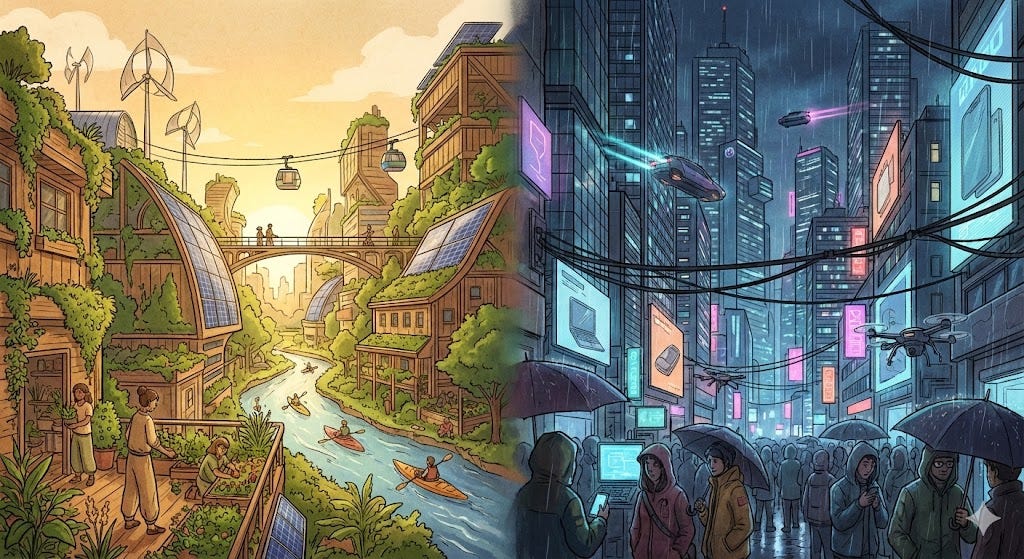
The direction here is one in which a wealthy elite control the output of automation, leaving little to none of it directed toward meeting the needs of the majority. This would likely involve undermining democracy, so that the public cannot use ordinary political power to enforce their interests. The primary outputs of such an economy would be serving the desires of the super rich, research and development aligned with elite goals, and systems of mass surveillance, autonomous internal security, and defence.
One common objection to this future is the lack of customers to buy products. But at this stage, there may no longer be a need for workers or mass consumers at all. AI could be directed to produce and innovate directly for elite interests, and without wages, there is no requirement for a broad consumer base. The result would resemble a highly automated command economy.
From the perspective of those in power, this system could be extremely efficient at accomplishing narrowly defined goals, without the need to distribute resources according to the demands of the wider population. Like the “perfect slavery” model outlined earlier, it maximises output under tight control: an over-optimised system that excels at executing a small set of objectives, but at the cost of suppressing broad creativity and discovery. A dystopian yet potentially powerful state.
The Solarpunk Model
This alternative is characterised by sharing the economic gains of automation across society, and potentially sharing some degree of power over how the economy is directed. This provides income for all and sustains broad demand. That demand is not only large, increasing the benefits of mass production, but also diverse. Freedom, equality, and human rights create space for different types of people to coexist, with varied desires, ambitions, and ways of thinking.
This diversity of demand stimulates discovery, exploration, and innovation in many directions, generating new technologies and practices to meet these varied needs.
Alongside reduced reliance on mass surveillance through social trust, and the benefits of cooperation, a shared future has clear structural strengths.
The Creative Inefficiency of Freedom
The appeal of a cyberpunk future lies in the funnelling of resources toward a small number of priorities defined by those in power. Its core strength is efficiency. Its core weakness is that this efficiency is narrow. The system becomes over-optimised: highly capable within a limited range, but brittle outside it. A glass cannon.
Automation can research and innovate, but it remains constrained by the goals it is given. In a cyberpunk structure, those goals are necessarily few, reflecting the interests and imaginations of a narrow elite. By contrast, a solarpunk society embeds a populous and diverse set of human aims into its economic structure. With broad freedom, equality, and financial security, people pursue many different desires, experiments, and ways of living, all amplified by automation.
The result is that far more of the possibility space is explored. This exploration is not an accident or a moral aspiration, but a structural feature of the system itself. Freedom appears inefficient in the short term, but it generates discovery, adaptability, and resilience over time.
Solarpunk therefore has greater long-term innovative capacity and adaptability, while cyberpunk may retain an advantage in short-term dominance. This is the beginning of a non-ideological reason why solarpunk ultimately outcompetes it.

Cyberpunk Variants
A cyberpunk society is not forced into a single structure. There are several ways it could attempt to address its underlying weakness: the narrowness of its innovation and legitimacy base. Each, however, runs into structural limits.

Cyberpunk Reduction: The Surplus Population
One possibility is extreme reduction: elites conclude that most people are no longer economically useful and remove them from society entirely, treating them as surplus population.
This immediately raises a problem. With the population removed, the system loses not just consumers, but the diversity of human values, desires, and perspectives that drive discovery and innovation. The elite could attempt to compensate by instructing AI systems to artificially generate broad and diverse research directions. But if the system must recreate human diversity synthetically, the original efficiency rationale collapses. It would be far simpler to keep people alive, secure, and participating.
More fundamentally, it is unclear whether AI, lacking intrinsic values and lived variation, can reliably explore all meaningful directions of innovation without ongoing human input. Even if it could, this mode of innovation would remain fragile. It runs against the internal logic of cyberpunk, which prioritises efficiency and control. Over time, such artificial exploration would tend to be viewed as wasteful, and gradually cut back, narrowing the system again.
The result is a tendency toward stagnation or brittle over-specialisation.
Cyberpunk Inequality: Permanent Instability
A second possibility is to retain the majority of the population, but keep them poor, politically marginalised, and tightly controlled.
This avoids the total loss of human diversity, but still fails to generate broad and diverse demand, due to low consumer spending signals. Innovation remains skewed toward elite priorities. At the same time, inequality introduces a permanent internal conflict. A population that is educated, networked, and excluded from prosperity will not remain politically passive indefinitely.
The system could attempt to stabilise itself by allowing a higher but still constrained standard of living, creating a managed middle class under narrow control. This is more stable, but still structurally inferior to a society where the majority are genuinely free, equal, and secure. If neighbouring societies offer higher wellbeing and autonomy, legitimacy erodes.
Maintaining this imbalance requires surveillance, policing, censorship, and repression. These measures impose real economic and cognitive costs. They also suppress forms of innovation that might destabilise elite control, further narrowing the creative space of the society.
The Structural Dead End
In both cases, cyberpunk faces the same dilemma. To regain the adaptive and innovative power it lacks, it must reintroduce broad human participation, security, and agency. But doing so undermines the very concentration of power that defines the system.
Solarpunk, by contrast, is internally coherent. Its social structures reinforce one another: freedom supports diversity, diversity supports innovation, innovation supports shared prosperity, and shared prosperity sustains legitimacy. Cyberpunk exists in tension with itself, relying on control mechanisms that gradually weaken its own foundations.
Harmony produces robustness. Persistent contradiction produces decay.
Real World Context

Geopolitical Dynamics
In practice, different nations are likely to move toward solarpunk, cyberpunk, or hybrid arrangements rather than a single global outcome.
Solarpunk social structures tend to encourage empathy, cooperation, and legitimacy grounded in shared wellbeing. As a result, solarpunk societies are likely to cooperate with one another and view cyberpunk regimes as oppressive and unstable. Over time, this creates pressure on cyberpunk states through diplomatic isolation, economic competition, cultural influence, and the attraction of alternative models rather than only direct confrontation.
Hybrid systems may initially resist broad redistribution or democratic deepening out of fear of losing control. However, if solarpunk societies demonstrate stability, security, and sustained innovation, hybrid regimes have incentives to gradually adopt similar arrangements rather than face internal unrest or international disadvantage.
Among major powers, the United States appears structurally vulnerable to a cyberpunk trajectory if economic elites succeed in undermining democratic institutions. American political culture has historically emphasised liberty, sometimes at the expense of equality, which can be used to justify extreme inequality. At the same time, this path would conflict sharply with the country’s founding ideals, making it likely to encounter significant internal resistance.
Europe appears more structurally aligned with a solarpunk trajectory, given its stronger emphasis on combining liberty with equality through welfare states, labour protections, and democratic norms. It is also unlikely that external pressure alone could prevent Europe from moving further in this direction if automation accelerates.
China is less clear. If the Chinese Communist Party remains committed to socialist principles, it may support broad material security through mechanisms similar to UBI, while maintaining tighter political control. Concerns about social stability and productivity may slow any move toward shared economic direction. This points to a hybrid model that could gradually evolve into solarpunk rather than an immediate transition. China would also likely oppose a cyberpunk United States and find greater strategic alignment with solarpunk-oriented societies.
Elsewhere, outcomes are mixed. Russia currently exhibits cyberpunk tendencies through elite concentration of power and wealth. Much of South America appears more receptive to solarpunk ideals, particularly where inequality and exclusion are already seen as destabilising. More broadly, Enlightenment norms such as freedom, equality, and human dignity already exist to some degree across much of the world. Higher education levels and global connectivity make authoritarian consolidation increasingly difficult to sustain.
The Military
A further constraint on cyberpunk trajectories, particularly in established democracies, is the role of the military.
In the United States especially, the military recruits broadly from the population, emphasises national rather than elite identity, and values cohesion, legitimacy, and civilian trust. Senior leadership is generally well educated and institutionally invested in constitutional norms. This makes it less likely that the military would reliably support a full elite capture of the state against the broader population.
This does not guarantee resistance to authoritarian drift, but it does raise the cost and instability of any attempt to impose a cyberpunk order through force alone.
Risks and Timing
The strongest argument for cyberpunk dominance is short-term power. Highly centralised systems can mobilise resources quickly, suppress dissent, and pursue narrow objectives with speed.
However, this advantage must be weighed against the long-term strengths of solarpunk systems: legitimacy, adaptability, innovation through diversity, and lower internal friction. When combined with international dynamics and institutional constraints, cyberpunk power appears brittle rather than decisive.
The central question is therefore not which system can dominate fastest, but which can sustain itself without undermining its own foundations.
Harmony and Contradiction
The foundational problem for a cyberpunk future is that to keep up with breadth of exploration and innovation of a solarpunk society it would have to go against its own social structure and reason for existing in the first place.
Harmony functions better than contradiction. Liberty without equality causes disruptions. Equality without liberty stagnates. The principle of harmony acts as system level coherence, balancing democracy with individual human rights, and competition with cooperation, or fraternity and community.
Solarpunk aligns with existing human norms, continuing and more fully embracing the Enlightenment principles which have brought us this far already.
Summary: The Stronger Future
The central claim of this post is not that solarpunk is morally better than cyberpunk, but that it is structurally stronger.
As automation reduces the role of human labour, societies face a choice in how they organise abundance and power. One path concentrates control and output in the hands of a narrow elite, suppressing democracy and distributing resources only where they serve elite goals. This cyberpunk path can be highly efficient in the short term, executing a small number of objectives with high precision. But like a system of “perfect slavery,” it is narrow, brittle, and constrained by the limited perspectives and priorities of those in control.
The alternative solarpunk path distributes both material security and political agency broadly. By maintaining freedom, equality, and democratic legitimacy, it creates large and diverse demand, and with it a wide search across the space of possible innovations. This diversity is not waste. It is the engine of discovery. What appears inefficient in the moment becomes powerful over time, exchanging some efficiency for learning.
Capitalism originally outcompeted feudal and slave societies not because it maximised efficiency, but because it embedded freedom, equality, self-ownership, and experimentation into its social structure. Those same features allowed continuous innovation, adaptation, and growth. As automation threatens to dissolve capitalism’s labour mechanisms, the solution is not to abandon Enlightenment values, but to extend them more fully beyond the limits capitalism imposed.
Cyberpunk systems face internal contradictions. To remain competitive, they must either suppress diversity and risk stagnation, or artificially recreate it while denying people real agency. Both paths increase instability, repression, and long-term fragility. Solarpunk systems, by contrast, align their economic, political, and cultural structures around the same core values, giving them coherence and resilience.
The outcome is not guaranteed. Cyberpunk systems may appear dominant in the short term. But over time, legitimacy, adaptability, and broad-based innovation matter more than narrow optimisation. Societies that share abundance and agency are better positioned to endure, cooperate, and outcompete those built on exclusion and control.
The future is not decided by technology alone. It is decided by the social structures we choose to build around it.
Enlightenment Principles as Practical Systems
These principles are often treated as moral ideals. History suggests they are also functional design choices.
Self-Ownership
Grounds motivation, responsibility, and creativity. People who own their time and effort generate ideas elites cannot anticipate.Liberty
Allows individuals to explore, experiment, and pursue unplanned solutions. This expands the search space for discovery and innovation.Equality
Prevents the concentration of perspective and power. Broad participation increases informational diversity and reduces systemic blind spots.Diversity
Increases the range of perspectives, experiences, and cognitive approaches within a society. A diverse system explores more of the solution space and is less likely to fail catastrophically.Tolerance
Allows diversity to persist over time. Without tolerance, variation collapses under social or political pressure, eliminating the very source of adaptability.Property Rights
Provides continuity, accountability, and incentive without requiring central direction of every decision.Democracy and Consent of the Governed
Create legitimacy and feedback loops. Systems that listen adapt better and waste fewer resources on repression.Human Rights
Stabilises societies by protecting individuals from being treated as expendable inputs rather than contributors.Fraternity, Cooperation, or Social Trust
Reduces enforcement costs and enable large-scale coordination without surveillance or coercion.Truth and Curiosity
Protects the freedom to investigate reality without requiring immediate utility or ideological alignment. Truth-seeking acts as a long-term error-correction system and a reservoir of future capabilities, enabling societies to adapt to unknown challenges and opportunities.Creativity, Individualism, and Non-Conformity
Protects the freedom to imagine, express, and experiment without requiring an immediate purpose or justification. This allows art, theory, and unconventional ideas to exist before their value is understood. Many of the most transformative innovations begin as aimless exploration rather than goal-directed optimisation.Pursuit of Happiness
Expands motivation beyond survival. Aspirations, inspiration, and meaning are not luxuries but drivers of progress.
Taken together, these principles function less like moral constraints and more like protections for exploration.
Solarpunk protects three forms of exploration that cyberpunk systems systematically suppress:
Exploration of reality
Truth-seeking and scientific inquiry driven by curiosity rather than immediate application.Exploration of possibility
Creativity, imagination, and artistic expression unconstrained by predefined objectives.Exploration of value
The pursuit of happiness, meaning, aspiration, and new ways of living.
Taken together, these principles reduce short-term efficiency while dramatically increasing long-term adaptability and innovative capacity. They form a coherent social structure that has already proven capable of outperforming more rigid and authoritarian systems.
Solarpunk is not a break from this tradition. It is its continuation under conditions of automation.